

Kilim / Kelim
Ein Kelim ist ein gewebter Teppich, der mehr ist als nur ein schönes Objekt. Er erzählt von Menschen, von Herkunft und von Zeit. Jeder Kelim ist in Handarbeit entstanden – oft aus dem Alltag heraus, mit viel Erfahrung und Gefühl im Handwerk.
Die Kelim Teppiche in unserer Kollektion sind ca. 20 bis 60 Jahre alt, manche sogar noch älter. Sie wurden in verschiedenen Regionen gefertigt und haben bereits ein Leben hinter sich, bevor sie zu uns gekommen sind. Heute tragen sie diese Geschichte weiter – sichtbar in ihren Mustern, Farben und den feinen Spuren der Zeit. Jeder Kelim ist ein stilles, warmes Unikat mit Charakter.
HERKUNFT UND KULTURELLE VERANKERUNG
Die Ursprünge des Kelim liegen tief in den textilen Kulturen Vorderasiens, insbesondere in Regionen Anatoliens, wo das Weben nicht als Handwerk im engen Sinne verstanden wurde, sondern als Teil des Lebens.
Nur noch wenige Kelims entstehen heute in ihrer ursprünglichen Form in der Türkei. Das Wissen um Material, Muster und Technik ist selten geworden und wird zunehmend von industriellen Produktionsformen aus Ostasien verdrängt.
Historisch waren Kelim eng mit den zentralen Lebensmomenten verbunden. Sie begleiteten Übergänge, markierten Zugehörigkeit und trugen symbolische Bedeutung:
- als Teil der Mitgift einer Tochter
- als textile Ausstattung von Nomaden
- als kostbare Objekte, die oft nicht für den Alltag gedacht waren
Viele Stücke wurden mit einer solchen Sorgfalt gefertigt, dass ihre eigentliche Bestimmung fast zweitrangig wurde – sie waren zu wertvoll, um sie dem täglichen Gebrauch auszusetzen.
WEBKUNST
Die Herstellung eines Kelim ist ein langsamer, konzentrierter Prozess.
Viele der heute erhaltenen Stücke wurden von Nomadinnen sowie Frauen aus den Dörfern Anatoliensgewebt, die in der Bewegung zwischen Landschaften nicht nur textile Flächen schufen, sondern tragbare Räume. Diese Webtradition wurde über Generationen hinweg weitergegeben – nicht als festgehaltenes Wissen, sondern als gelebte Praxis. Ihre Arbeit verband Funktion, Schutz und kulturelle Erzählung in einem einzigen Objekt, wobei jede Linie im Gewebe Spuren von Erfahrung, Rhythmus und Herkunft bewahrt.
SPRACHE DER MUSTER / MOTIVE
Die Muster eines Kelim sind keine Dekoration im modernen Sinn. Sie sind eine visuelle Sprache.
Geometrien, Wiederholungen und Farbkontraste entstehen aus überlieferten Symbolsystemen, die Schutz, Leben, Natur und Übergänge beschreiben. Jeder Kelim ist damit zugleich Objekt und Erzählung.
MATERIAL UND STRUKTUR
Ein Kelim ist flach gewebt, ohne Flor, reduziert auf Struktur und Spannung. Diese Klarheit macht ihn zugleich leicht und erstaunlich widerstandsfähig.
Die Unregelmäßigkeit im Gewebe ist kein Makel, sondern Ausdruck von Handarbeit – ein sichtbarer Beweis menschlicher Präsenz im Material.
NUTZUNG UND ZEIT
Ein Kelim ist für Räume gedacht, die gelebt werden.
Er verändert sich mit der Zeit, ohne seine Identität zu verlieren. Gebrauchsspuren sind keine Abwertung, sondern Teil seiner Biografie.
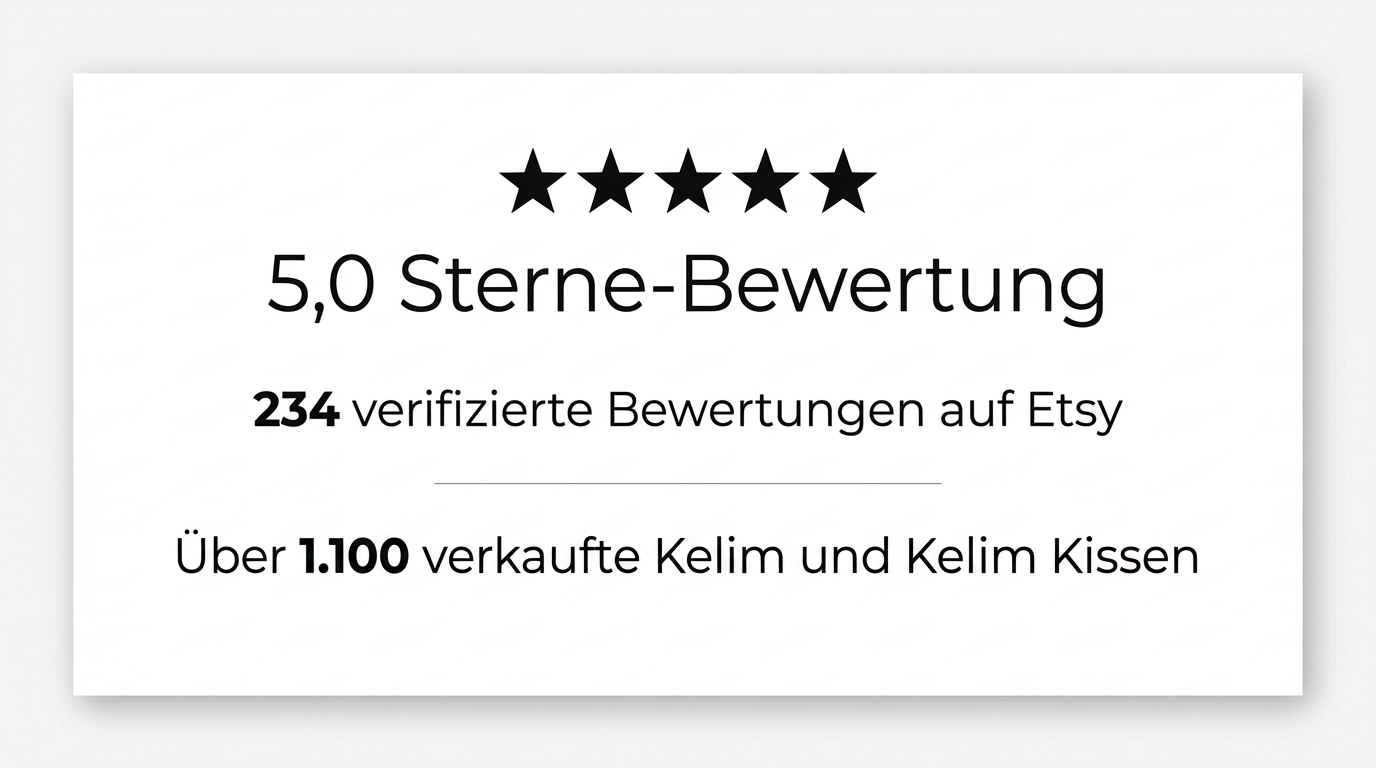
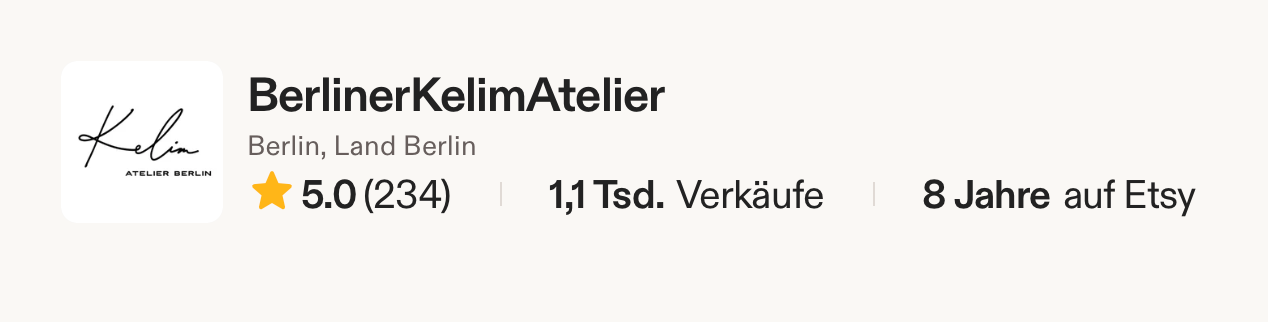
See our customer satisfaction on Etsy
1,100+ Times Trusted
We have shipped our Kilims and Kilim cushions worldwide over 1,100 times. Our customers love the quality: over 95% of the submitted reviews are 5-star ratings. Because your satisfaction and genuine quality are important to us.